

The United Soccer League (USL) made a massive announcement Thursday morning that could shake the foundation of men’s professional soccer in the United States.
That news first came from Paul Tenorio of The Athletic, who reported on USL’s intention to create a new first-division men’s professional league alongside Major League Soccer (MLS).
This new League, which would be slated to kick off in 2027, initially would consist of 12-14 clubs likely being picked from the current USL Championship and possibly new ownership groups brought on board.
USL CEO Alec Papadakis released a statement on the League’s website that read:
“Today is a defining moment for the USL and the future of soccer in the United States. Creating a Division One league is a bold step forward, expanding access to top-tier competition, deepening the connection between our communities and taking another step in aligning with the structure of the global game. By uniting people through soccer and bringing Division One to more cities, we’re not just growing the sport—we’re creating lasting opportunities while building a more sustainable and vibrant soccer ecosystem in the U.S.”
Papadakis added:
“The USL has long been committed to creating a structure that drives growth, opportunity, and long-term success in American soccer. The USL model empowers clubs with greater autonomy and fosters a dynamic, interconnected system—one that allows them to compete at the highest level while remaining deeply rooted in their communities. Around the world, top-tier clubs thrive in cities of all sizes, and we believe the same is possible here. The demand and infrastructure are in place, and the potential for growth is immense.”
Meanwhile, USL president and chief soccer officer Paul McDonough told The Guardian that he doesn’t think this approach is “a threat to the MLS,” further saying that “I think we’re just gonna go and do our business.”
The timeline and the timing of the announcement are also interesting. As far as the timeline goes, the 2027 target date for Division One sanctioning would fall almost immediately after the 2026 World Cup taking place in the United States, Canada, and Mexico.
When it comes to the timing, the announcement comes in the wake of the NASL antitrust lawsuit against the U.S. Soccer Federation and MLS, which a jury ultimately ruled in favor of the USSF and MLS. However, despite the ruling, the USSF and MLS claimed that they were okay with two Division One leagues existing in the United States under Pro League Standards. The issue allegedly came from the USSF and MLS believing that the NASL was originally in violation of PLS and were not on a path to satisfy PLS requirements writes UCLA Law Professor Steven Bank on Blue Sky.
Pro League Standards and its ambiguity
One of the perceived biggest hurdles of any League seeking Divison One sanctioning from US Soccer is the Federation’s “Pro League Standards” or PLS, which is a set of required yet ambiguous guidelines that need to be met to secure the title of not only Division One soccer but professional soccer in the United States.
Some of the standards for Division One include:
- 12 member clubs at launch; 14 by the third year of operation
- 75% of clubs located in a metro area with a population exceeding 1,000,000
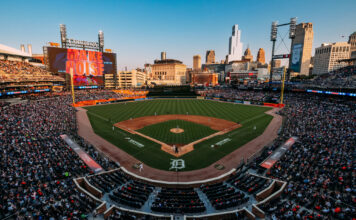
- The capacity of each club’s stadium must exceed 15,000
- Actively operating in at least three time zones
Two of those three benchmarks aren’t a problem for USL Championship teams, which is currently a Division Two league operating right below MLS; however, there are only two current teams in the USL with stadium capacities that would technically meet Division One PLS requirements. It’s also a requirement that a lot of critics of the announcement like to point out.
If the post-pandemic landscape of US Soccer has taught us anything, it’s not only that PLS is based on that aforementioned ambiguity but that it’s also circumventable. For multiple seasons, the National Independent Soccer Association (NISA), a former Division Three League in the United States, at times conducted matches in public parks while the League ran the day-to-day operations of multiple teams during its existence. Additionally, MLS circumvented the rules by exploiting loopholes when it came to the requirment that all professional teams must compete in the US Open Cup, the Federation’s domestic cup tournament.
Will a USL Division One League be successful?
Two top leagues competing in the same sport isn’t unheard of. It’s part of the history of our top four professional leagues in the United States. Let’s not forget that Major League Baseball came about after the merger of the American and National Leagues. The same can be said for the NBA and its merger with the ABA, the NFL and its merger with the AFL, and the NHL and its merger with the WHL. Sure, the League’s eventually merged which ultimately could be down the road when it comes to the USL and MLS, however, there is that precedent with previously successful dual professional leagues at the top in the United States.
Not to mention, the USL isn’t some start-up that has only existed for a few years. It’s technically older than MLS, having been established back in 1986 while consisting of clubs that have their own rich histories. US Soccer has also set a recent precedent for itself by sanctioning the USL Super League as a Division One league in the women’s game alongside the NWSL.
Something else the USL has is a legitimate television deal with the likes of CBS and ESPN, making it more accessible to fans and supporters in the United States than its chief competitor in MLS, which largely broadcasts its matches behind a paywall on Apple TV. This may be the most important aspect in all of this, especially when it comes to obtaining sanctioning, when you consider the power broadcasters have in this country when it comes to professonal and major college sports. It’s hard to imagine the US Soccer denying sanctioning over something absurd like stadium size if the league is able to produce decent ratings on major broadcast platforms.
Who would be part of the new USL Division One League?
Again, it shouldn’t be hard to populate a Division One league with an ambiguous 12-team requirement. In his article, Tenorio highlights Louisville City, Indy Eleven, the Sacramento Republic, Phoenix Rising, New Mexico United, the Colorado Springs Switchbacks, and the Las Vegas Lights as possible clubs to make the jump. Additionally, you’d also have to think that Detroit City FC and the Tampa Bay Rowdies would also be under heavy consideration considering Detroit, Tampa Bay, and Phoenix are the only top 15 markets that currently do not have a Division One soccer team. Brooklyn FC who will play their inaugural season in the USL Championship in 2026 could also be a possibility for USL D1.
We reached out to Detroit City FC on USL’s announcement. However, co-owner Alex Wright mentioned that the club would not make any comment at this time.
Pro/Rel on the Horizon for USL?
USL’s Thursday announcement continued to fuel the debate on whether the League will also implement promotion and relegation, a commonality when it comes to professional leagues around the world but nonexistent here in the United States.
McDonough mentions that there are no immediate plans to institute pro/rel but that it’s always been an “ambition” of the League.
“We’ve always stated our ambition to get there, but it’s a little bit more complicated in this ecosystem,” he said. “If the opportunity arises for us to do it, then we’ll do it.”
If the USL is successful in obtaining Division One sanctioning, the League would have a presence in all three tiers of men’s professional soccer in the United States with USL League One, USL Championship, and USL D1.
A move to Division One and ultimately pro/rel may be the saving grace for USL, though. There’s no question that MLS is a juggernaut, relatively speaking when it comes to soccer in the United States. However, soccer is still the fifth professional sport in the U.S. and certainly still open to some parody and opportunity when it comes to offering fans something different that MLS isn’t currently doing.