
The Tigers and Guardians, longtime AL Central rivals, meet in the Wild Card round after Cleveland’s remarkable comeback in September erased Detroit’s large division lead. Detroit earned a Wild Card spot at 87–75, while Cleveland won the AL Central at 88–74.
Roster Composition & Notables
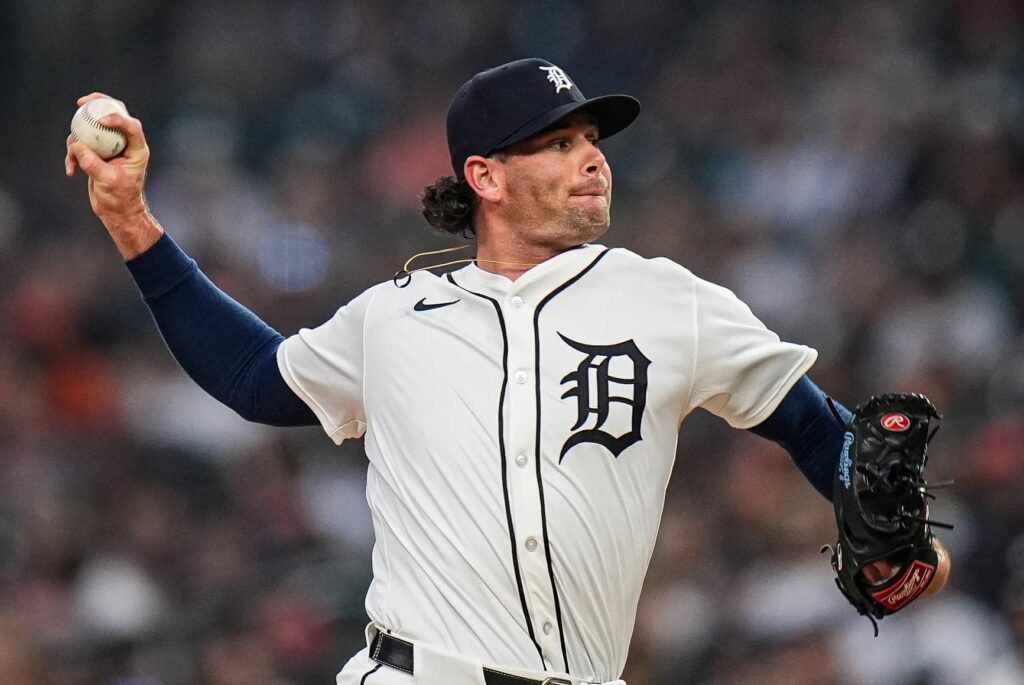
The Tigers carry 13 pitchers (maximum allowed), and 13 position players. Among pitchers included are Casey Mize and Keider Montero, both right-handers. A notable absence is Colt Keith (recovering from right rib cage inflammation), meaning Detroit leaned a bit lighter in the bench/infield depth. The bullpen has only two left-handed relievers: Tyler Holton and Brant Hurter — a surprising call given Cleveland’s lefty bat presence. Also omitted: Brenan Hanifee and Bailey Horn, both lefties who had been in the mix. On the position side, outfielder Jahmai Jones (who was on a late-season hot streak) is included — though in a bench/platoon role.
The Game 1 starting lineup (for the opener) is:
1. Parker Meadows (CF)
2. Gleyber Torres (2B)
3. Kerry Carpenter (DH)
4. Spencer Torkelson (1B)
5. Riley Greene (LF)
6. Wenceel Pérez (RF)
7. Dillon Dingler (C)
8. Zack McKinstry (3B)
9. Javier Báez (SS)
Tarik Skubal draws the start for Detroit in Game 1.
Strengths, Risks & Strategy
The decision to carry only two lefty relievers suggests Detroit is banking on favorable matchups or relying on matchups via bullpen scheduling. But it leaves less flexibility against left-handed Cleveland hitters. By excluding certain bullpen arms, Detroit seems to prioritize pitchers they trust more in high-leverage spots. Detroit’s lineup leans balanced: they have left-handed and right-handed hitters to counter Cleveland’s starting rotations.
Cleveland Guardians’ Wild Card Roster
The Guardians also officially released their 26-man Wild Card roster. Highlights and structure:
Roster Breakdown
Catchers: Austin Hedges, Bo Naylor
Infielders: Gabriel Arias, Kyle Manzardo, Angel Martínez, José Ramírez, Brayan Rocchio, Daniel Schneemann
Outfielders (7): Steven Kwan, Petey Halpin, C.J. Kayfus, Jhonkensy Noel, Johnathan Rodríguez, George Valera, and Chase DeLauter
Starters: Gavin Williams, Tanner Bibee, Slade Cecconi
Relievers: Kolby Allard, Joey Cantillo, Matt Festa, Hunter Gaddis, Tim Herrin, Jakob Junis, Erik Sabrowski, Cade Smith
Key Notes & Decisions
The addition of Chase DeLauter is significant: he is a top prospect, and his inclusion means he’s on the postseason roster before having any regular-season MLB experience. Cleveland’s outfield depth is robust with seven outfielders — giving flexibility, defensive substitution options, and platoon coverage. The rotation of Williams / Bibee / Cecconi gives them balance and allows the Guardians to tailor matchups. The bullpen is a mix of power arms and matchup guys. Notably, Erik Sabrowski is viewed as a potential weapon against left-handed hitters in Detroit’s lineup. With David Fry injured (hit in the face by a 99 mph pitch and subsequently ruled out for 6–8 weeks), Cleveland needed another option in their lineup/outfield pool — this likely influenced roster flexibility decisions.
Roster Matchups & Tactical Thoughts
Cleveland’s deep outfield and extra bench pieces allow them to shift defensive alignments and pinch-hit/platoon more aggressively versus Detroit’s pitchers. Detroit, with fewer left-handed relievers, may face challenges in late innings against Cleveland’s lefty-heavy bench. The inclusion of DeLauter is a gamble: his raw tools are enticing, but deploying him, especially in pressure spots, carries risk. Detroit’s strategy seems to pivot around maximizing the trusted arms, trusting their starters (Skubal et al.), and hoping to limit Cleveland’s bench maneuvers. The matchup in Game 1 — Skubal vs. Williams — is pivotal. If Detroit can win Game 1, Cleveland’s bench-play advantage is less meaningful.