

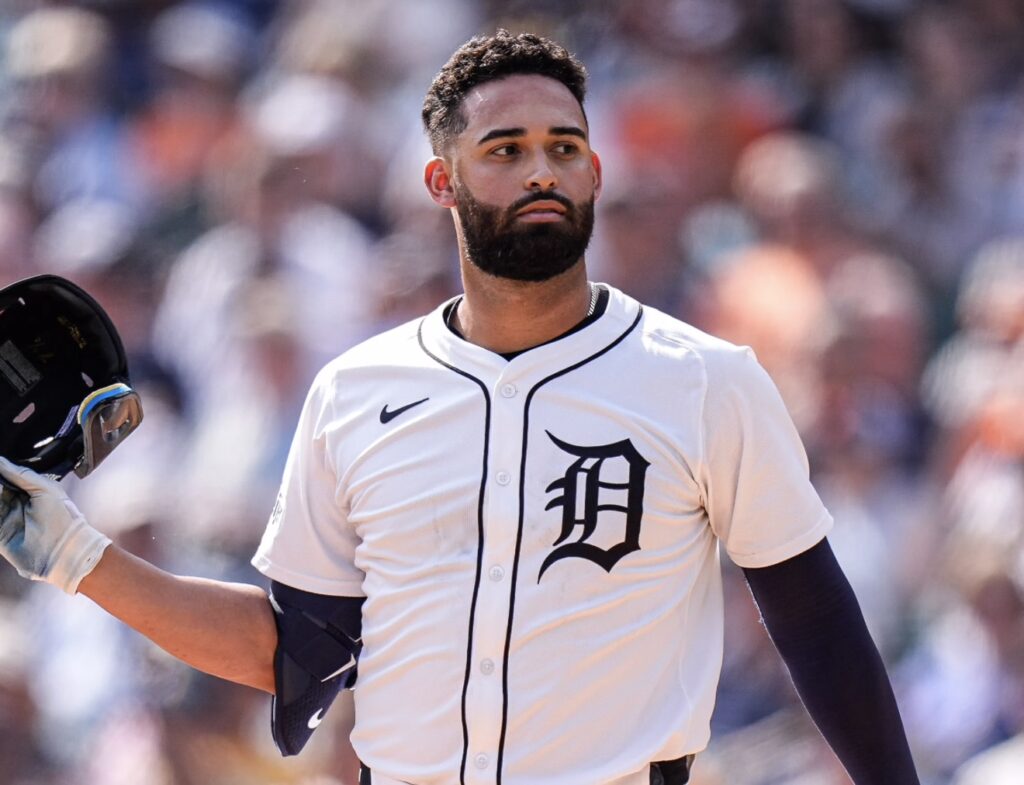
As the Detroit Tigers push through September, their offense has hit a wall at the worst possible time. A team that once looked comfortable in the AL Central is suddenly scuffling, with recent games highlighting a lack of timely hitting and slumping stars.
The Tigers’ lineup, which hovered around league average for much of the season, has dipped significantly over the past 10 games, batting just over .210 as a team while struggling to push across runs. A string of one- and two-run losses has shrunk their margin for error, leaving fans and analysts questioning whether the offense can rebound in time to protect a postseason berth.
Who’s trending up and who’s slumping
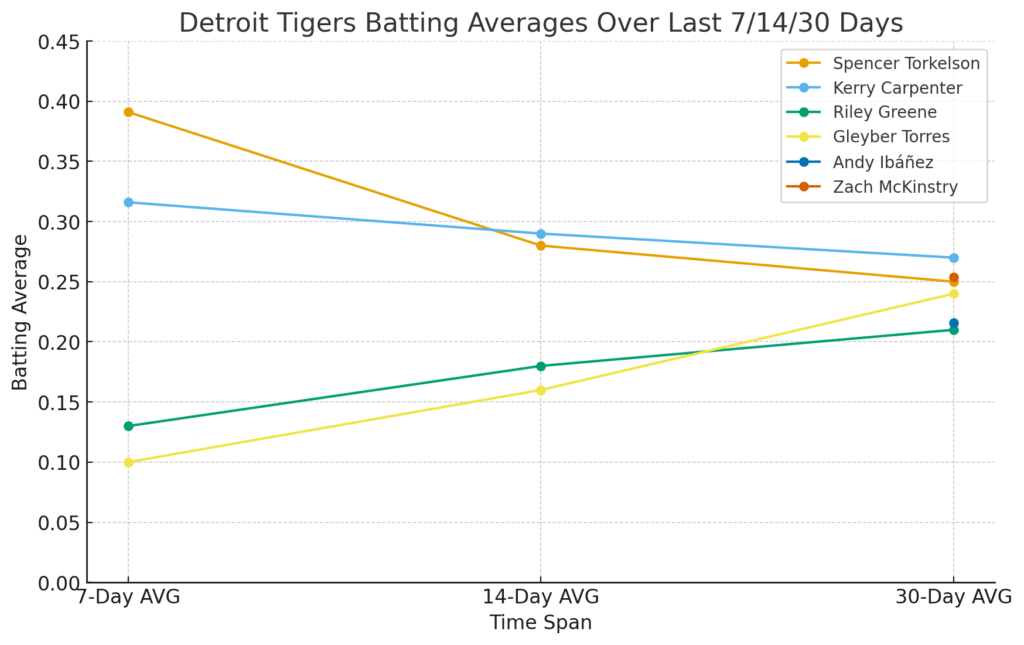
Recent splits shine a spotlight on the inconsistency. Looking at the past 7, 14, and 30 days for Detroit’s key hitters shows a team divided between hot bats and prolonged slumps.
Spencer Torkelson has finally found a spark. Over the last week he’s hitting nearly .400 with an OPS north of 1.000, a massive turnaround from the first half of September when his average lagged closer to .200. Stretching back 30 days, his production is still uneven, but his current form is one of the few bright spots for Detroit.
Kerry Carpenter is also showing signs of life. In the past seven days he’s slugging over .600 and has been Detroit’s most consistent power threat. Over the last month he’s hit closer to his season norms, suggesting he may be stabilizing into a reliable force down the stretch.
Riley Greene, however, is ice cold. The former first-round pick is hitting barely over .130 in his last seven games, with minimal power. Over the past 30 days he has remained well below his season averages, struggling to generate extra-base hits. His slump has been particularly damaging given his role as a table-setter in the heart of the lineup.
Gleyber Torres has mirrored Greene’s struggles. Once acquired to be a steady infield bat, Torres is hitting close to .100 over the past week and hasn’t provided the kind of power that Detroit expected. His 30-day numbers are steadier but still below expectations, underscoring his need to rebound quickly.
Andy Ibáñez has cooled off after some midseason flashes. He’s hitting just .216 with a .256 on-base percentage over the last month, offering little consistency in run-producing situations.
Zach McKinstry has quietly been more reliable. Over the last 30 days he’s posted a .254 average with some sneaky pop, slugging around .444. While not spectacular, his steadiness has kept him from being part of the problem.
Why the offense is sputtering
Detroit’s struggles go beyond just a few players. The lineup has had difficulty sustaining rallies, often stranding runners in scoring position. Strikeouts have risen during this skid, and walks have fallen, making it harder to manufacture offense. The Tigers’ lack of depth also compounds the issue: when multiple middle-of-the-order bats go cold simultaneously, there aren’t enough consistent hitters to pick up the slack.
What it means for the stretch run
The Tigers still control their playoff destiny, but their path has narrowed. With a reliable starting rotation keeping games close, the bats don’t need to be elite — they just need to be competent. For that to happen, players like Greene and Torres must rediscover their form, while Torkelson and Carpenter must maintain their current surge.
If Detroit’s lineup balances out, they can survive this skid and still punch their postseason ticket. If not, a September collapse could be complete.